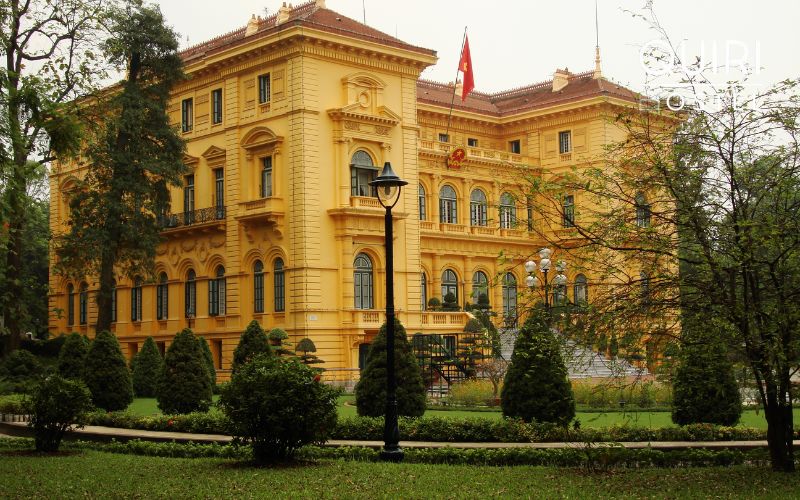
Presidential Palace Hanoi is one of the city’s most striking historical landmarks, blending French colonial architecture with modern political significance. Located in Ba Dinh District, this bright yellow residence offers travelers a deeper look into Vietnam’s leadership history.
Why You Should Visit Presidential Palace Hanoi
Presidential Palace Hanoi reveals Vietnam political transformation
If you are building your Hanoi itinerary, Presidential Palace Hanoi deserves attention not just for its appearance, but for what it represents in Vietnam’s political journey.
-
A symbol of political transformation
Built for French colonial authorities, the palace later became part of the government complex of independent Vietnam. Few buildings reflect such a dramatic historical shift in purpose and meaning.
-
Striking French colonial architecture
The mustard-yellow façade, arched windows, and symmetrical design make it one of Hanoi’s most elegant colonial-era structures. It stands out visually among traditional Vietnamese landmarks.
-
Powerful contrast with Ho Chi Minh’s stilt house
Just behind the palace sits a simple wooden residence where Ho Chi Minh chose to live. This contrast between grandeur and modesty tells a deeper leadership story.
-
Prime location in Ba Dinh District
The palace sits near Ho Chi Minh Mausoleum and Ba Dinh Square, making it easy to combine with other important historical attractions.
What to See at the Presidential Palace in Hanoi
Although visitors cannot enter the main palace interior, the surrounding complex offers plenty to explore and photograph.
Presidential Palace Exterior
The bright yellow façade immediately captures attention against the surrounding greenery. Its French colonial design, complete with arched windows and decorative balconies, reflects early 20th-century European influence. Even without interior access, the exterior alone makes Presidential Palace Hanoi architecturally impressive.
Ho Chi Minh Stilt House
Hidden just behind the grand palace, the modest wooden stilt house tells a very different story. Ho Chi Minh chose to live here instead of inside the colonial mansion. The preserved rooms and simple furnishings highlight humility over grandeur.
Garden Grounds and Walking Paths
The landscaped gardens surrounding Presidential Palace Hanoi create a surprisingly peaceful environment. Wide paths, shaded trees, and open lawns offer space to slow down. The calm setting balances the political importance of the site with a reflective atmosphere.
Ho Chi Minh Pond Area
Near the stilt house, a quiet pond mirrors the wooden structure and surrounding trees. The tranquil water softens the formal feel of the complex, giving visitors a more intimate glimpse into Ho Chi Minh’s daily surroundings.
Ho Chi Minh Museum
A short walk away, the Ho Chi Minh Museum provides broader historical context through exhibits and multimedia displays. Visiting after Presidential Palace Hanoi helps connect the architecture with Vietnam’s independence movement and modern political development.
Practical Tips for Visiting Presidential Palace Hanoi
A bit of preparation will make your visit smoother and more comfortable.
- Visit early in the morning
Temperatures are cooler, and the grounds feel quieter. Morning visits also make it easier to combine nearby attractions efficiently.
As part of a politically significant complex, respectful attire is recommended. Covering shoulders and knees helps ensure smooth entry to the broader site.
Give yourself enough time to explore the grounds, stilt house, and nearby museum areas without rushing through the experience.
- Combine with nearby landmarks
Plan a half-day itinerary including Ho Chi Minh Mausoleum and Ba Dinh Square to gain a fuller understanding of Vietnam’s modern history.
Final Thoughts for Travelers
Presidential Palace Hanoi is more than a beautiful colonial building. It is a landmark that reflects Vietnam’s journey from colonial rule to independence and modern governance. For travelers seeking context, symbolism, and architectural elegance, this site adds meaningful depth to any Hanoi itinerary.