



Share
9 Smart Tips to Ensure Street Food Safety in Vietnam
Content summary
Street food safety is a top concern for many travelers arriving in Vietnam. The flavors are unforgettable, but so are bad stomach experiences if you’re careless. This guide shows exactly how to avoid food poisoning Vietnam while still enjoying every bite like a seasoned local.
Why Travelers Should Know Street Food Safety
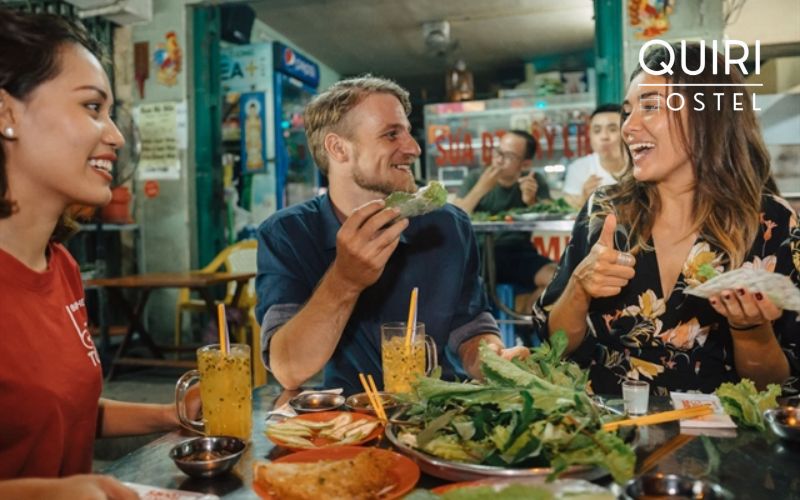
Understanding street food safety risks helps travelers avoid unnecessary illness
Vietnam is a food lover’s paradise, but the transition to a tropical climate and different hygiene standards can be a challenge for international stomachs. By following a few simple “rules of the road,” you can significantly reduce your risks and eat like a local:
- Protect Your Health: The most obvious benefit is physical. Avoiding contaminated water or undercooked meats means you stay energized for the whole trip.
- Save Your Budget: A case of “Hanoi Belly” can result in expensive medical bills or missed flights. A small investment in caution saves a lot of money in the long run.
- Discover High-Quality Flavors: Often, the safest stalls are also the most delicious because they rely on high turnover and fresh ingredients.
- Peace of Mind: When you know what to look for, you can stop worrying and start enjoying the incredible textures of Banh Mi or the aromatic broth of Pho.
- Support Ethical Vendors: By choosing stalls that maintain high standards, you are supporting local business owners who take pride in their craft and their customers’ well-being.
Essential tips to avoid food poisoning Vietnam
Following these practical strategies provided by Quiri Hostel Hanoi will help you enjoy every spicy and savory bite while you avoid food poisoning in Vietnam.
1. Follow the Crowd
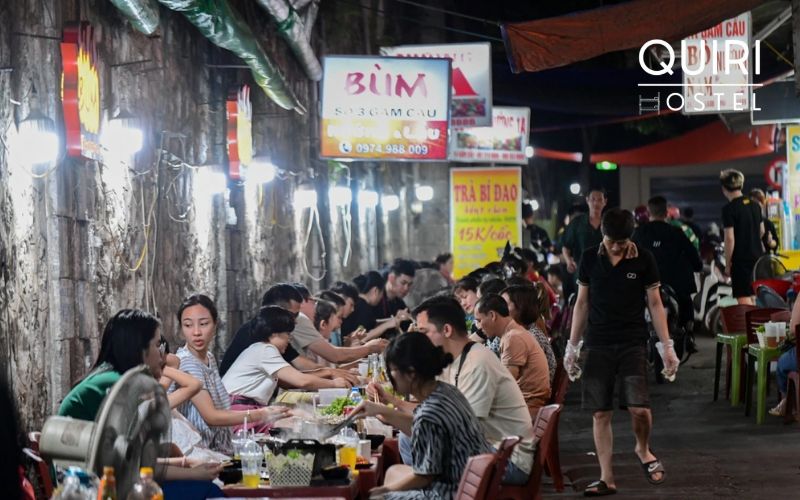
Busy stalls often signal strong street food safety standards
The golden rule of street food safety is to look for stalls packed with locals. High turnover means the ingredients don’t sit around in the heat, ensuring that the meat and broth are replenished frequently throughout the day.
2. Be Careful With Ice
Most ice in major cities like Danang is industrially produced and safe, but be cautious at rural stalls. If the ice looks like jagged, hand-cracked blocks rather than uniform cylinders with holes, it’s best to skip it to stay safe.
3. Choose Food That’s Cooked Fresh and Hot
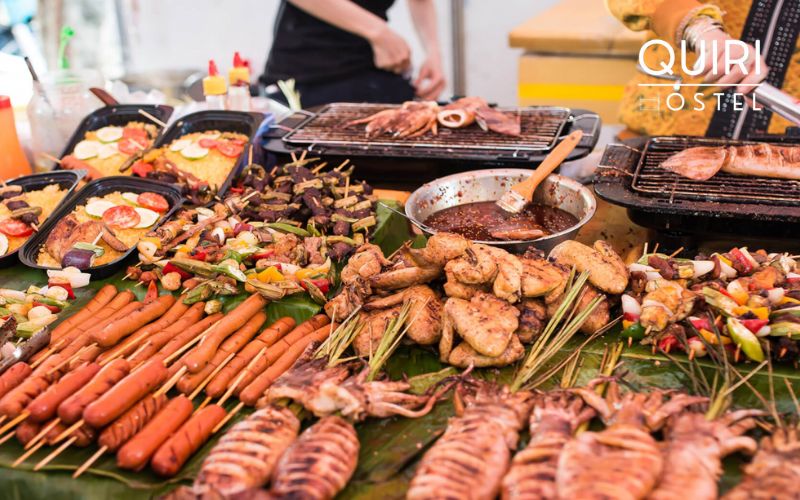
Fresh cooking reduces risk and supports street food safety
To avoid food poisoning in Vietnam, prioritize dishes that are boiled, fried, or grilled right in front of you. Piping hot food kills most bacteria, making a steaming bowl of Pho much safer than a pre-made, lukewarm snack.
4. Raw Herbs & Veggies
Fresh herbs are essential to Vietnamese cuisine, but they can carry bacteria if washed in tap water. If you have a sensitive stomach, dip your herbs into your hot soup to lightly blanch them before eating for extra security.
5. Check Cleanliness
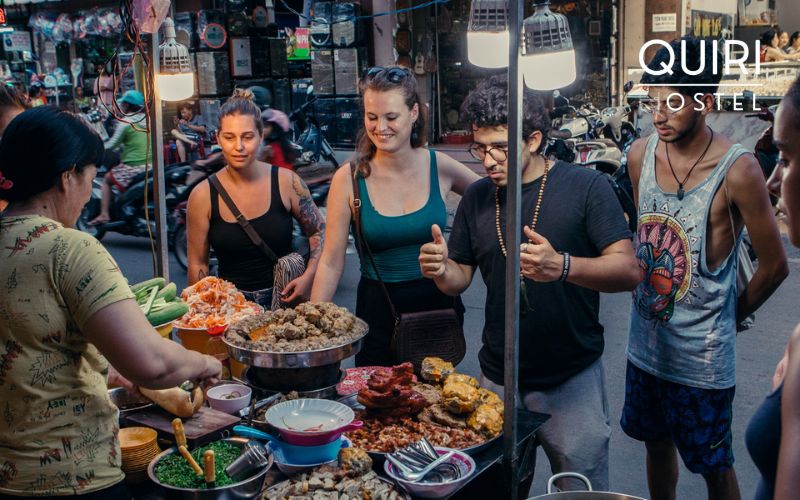
Visual checks improve street food safety and reduce contamination risks
Take a quick look at the vendor’s workspace before sitting down. Are they using separate utensils for raw and cooked meat? Is the floor relatively clear of trash? A tidy stall is usually a good indicator of general street food safety standards.
6. Stick to Bottled or Filtered Water
Never drink tap water in Vietnam. Stick to reputable brands of bottled water or use filtered water provided by your hotel. Even when brushing your teeth, many travelers prefer using bottled water to be completely sure they avoid any stomach upsets.
7. Ease Into Street Food
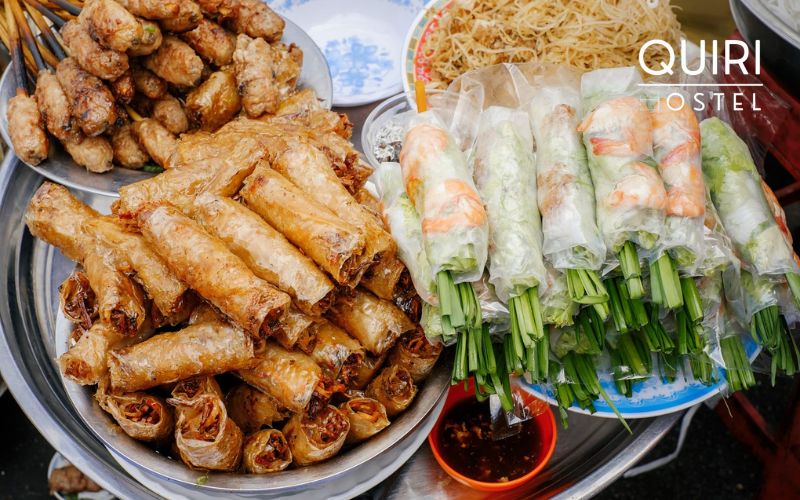
Gradual eating habits support better street food safety adaptation
Don’t try everything on your first day. Give your gut microbiome time to adjust to the new spices and environment. Start with simpler cooked dishes before moving on to more complex street eats as your confidence and “stomach strength” grow.
8. Bring Basic Meds
Despite your best efforts, sometimes the body just needs help adjusting. Pack a small kit with rehydration salts and charcoal tablets. Having these on hand provides peace of mind and ensures a minor hiccup doesn’t ruin your entire Vietnam itinerary.
Final Thoughts
Eating on the street is the most rewarding way to experience the soul of this incredible country. By practicing basic street food safety, you can enjoy every spicy, salty, and sweet bite with total confidence. Trust your instincts, look for high turnover, and enjoy the feast. Book your adventure today!
Người đăng:
Quiri Hostel
Ngày đăng:
17/03/2026
Adventures at Quiri
See more